

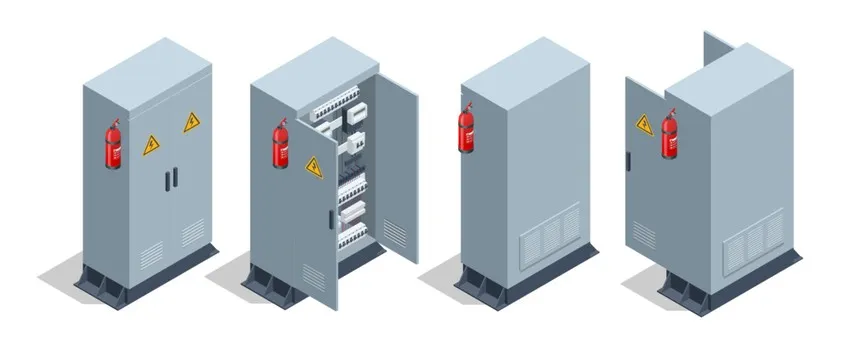
Imagine this: your home stays powered through a storm, your solar panels fill up an “energy cabinet”, and you lower your electricity bill and enjoy greater security. That’s what an energy cabinet or new battery cabinet does—it’s the heart of a smart, resilient home energy system.
What Is an Energy Cabinet?
An energy cabinet, or battery cabinet, is a small, contained unit that houses battery storage, power electronics, and controls to control your home’s electrical energy. According to NYSERDA, home energy storage systems are typically in the form of wall-mounted cabinets alongside your breaker box or on a concrete slab outdoors.
Key components are:
- Battery module (often lithium-ion)
- Inverter or converter
- Cooling and safety systems
- Housing enclosure
These cabinets are utilized in combination with the grid or solar panels, giving homeowners better control over their power supply.
Why Use an Energy Cabinet at Home?
Here are three important benefits:
Backup power when it matters. When the grid is out, an energy cabinet steps in to keep critical systems like refrigeration or home office machinery running.
Lowered energy bills and peak-shaving. Charge the cabinet when electricity is cheap or your solar panels are over-producing, then discharge when needed.
Increased solar integration and home value. Pair solar with a battery cabinet to maximize self-consumption and make your home more resilient—something increasingly in demand by buyers.
Smart Applications & Trends
On Sydney suburbs, homeowner John installed a battery cabinet on his rooftop solar. On nights of load-shedding, his lights stayed on with neighbours in the dark.
In Freiburg, Germany, constructors are specifying energy cabinets on new low-energy homes from day one—a certain indicator that the technology is headed mainstream.
Market analysis suggests energy storage allows larger levels of renewables into the grid without large-scale grid upgrades.
What to Consider When Buying a Battery Cabinet
Below is a brief table of what to consider:
| Feature | Why It’s Important |
| Capacity (kWh) | Matches how much backup or solar storage you need. |
| Enclosure & Safety | Weather-rated cabinets (e.g., IP65) withstand weather, while indoor units need ventilation. |
| Battery Chemistry | Lithium-ion costs more but lasts longer than lead-acid. |
| Integration with Solar/EMS | If you already have solar, ensure the cabinet is inverter- or home energy system-compatible. |
| Scalability | Are you able to add more battery modules in the future if your load grows? |
| Warranty & Support | Houses need long-term reliability—not a 1-year fix. |
Battery Cabinet vs Traditional Backup Systems
Traditional backup systems typically operate with gasoline generators or over-sized lead-acid batteries. Battery cabinets offer:
Quieter operation (no fuel, less maintenance)
Zero indoor emissions
Instant switching (no delay)
Question: Are battery cabinets always worth the extra cost?
If you’re experiencing continuous outages or have solar, then yes—the future-proofing and resiliency and savings long term generally outweigh the initial expense.
RealWorld Example: A Home Energy Cabinet in California
In SoCal, a SMART home installation assembled a 13.5 kWh battery cabinet with 8 kW solar. During a recent grid shut-off because of a wildfire, the home automatically transitioned to backup in seconds and ran on stored energy for 36 hours. The homeowner couldn’t stop raving—”It’s not just about saving money; it’s about peace of mind.” This illustrates that new battery cabinets are not toys—they’re critical home infrastructure.
Future of Home Energy Cabinets
Energy cabinets are becoming intelligent: remote monitoring, predictive maintenance, and participation in grid services are becoming features.
As the incentives for solar self-consumption increase and the cost of batteries decreases, cabinets will become the standard.
Installation practices are evolving—home energy storage is now part of national programs like that of NYSERDA.
Frequently Asked Questions
Q: Am I able to buy a battery cabinet alone without solar?
Yes—you can. A stand-alone battery cabinet still offers backup power and potential peak-time savings. But pairing it with solar maximizes value.
Q: Must the cabinet be outdoors?
Not always. There are indoor-rated battery cabinets. If installed outside, make sure it’s weather-proofed and safety-coded for your region.
Q: Will it add value to my home?
It often does. Homes with self-generation and storage appeal to eco-conscious buyers, and with increasing grid uncertainties, resilience is becoming a selling point.
Choosing the right energy cabinet means aligning capacity, chemistry, placement and future growth—whether you’re looking to ride out blackouts, improve solar usage or capture time-of-use savings.